
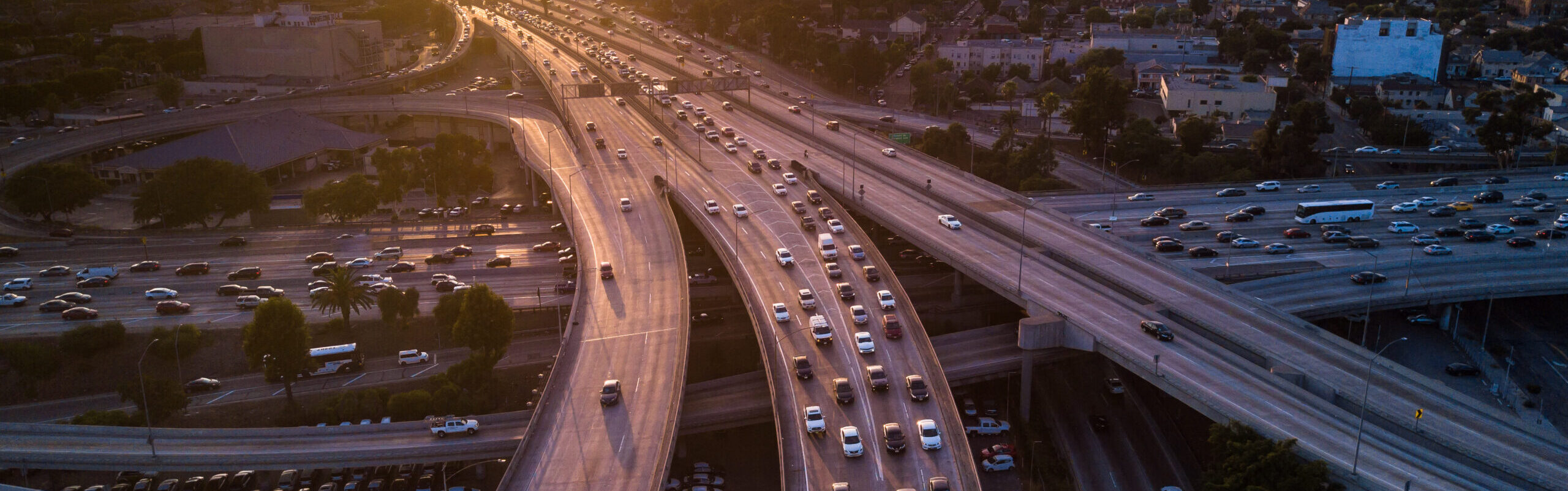
Attitudes Toward Speeding: Insights from Focus Groups and a National Survey of U.S. Drivers
This report explores driver’s attitudes towards speeding and speeding-related countermeasures through focus groups discussions with drivers and provides data on the prevalence of attitudes based on a survey of a representative sample of U.S. drivers.
August 2026
Introduction
Speeding remains a serious threat to safe mobility, contributing to nearly 30% of motor vehicle fatalities. Despite this, the AAA Foundation’s Traffic Safety Culture Index shows that many drivers view speeding as less dangerous than other risky behaviors, while speeding remains both the most common and, for many, the only risky driving behavior they report. Although proven countermeasures such as automated speed enforcement and intelligent speed assistance reduce speeding-related crashes, they have relatively low public support. This project examined how Americans define speeding and their attitudes toward speeding-related safety measures.
Methodology
This report employed a three-part approach to examine attitudes towards speeding. Part 1 reviewed the current state of knowledge on these topics. Part 2 involved eight focus group discussions with 58 drivers to qualitatively explore how people understand and define speeding and dissect attitudes towards speeding–related countermeasures. Part 3 designed a bespoke questionnaire to measure different attitudinal dimensions which was administered to a nationally representative sample of over 16,000 drivers. Quantitative analysis examined the prevalence of attitudes towards speeding and speeding–related countermeasures. A latent class approach explored how attitudinal dimensions interact to shape overall perceptions of speeding. State–level estimates of attitudes towards speeding are also presented.
Key Findings
- Drivers generally viewed speed limits as appropriate, but often did not view strict compliance as necessary. One in five drivers favored speed limits at least 10% above expected levels.
- Drivers primarily rely on two main criteria when judging whether another driver is speeding: whether they were keeping pace with surrounding traffic and the driver’s apparent ability to operate the vehicle safely under the prevailing conditions.
- A common social threshold for speeding emerged around 10 miles per hour (mph) over the posted limit, which many participants viewed as acceptable and unlikely to result in enforcement. Depending on the roadway context, speeds up to 25 mph above the posted limit were acceptable to drivers in certain circumstances. Perceptions of enforcement strongly influenced speed choices.
- The flow of traffic functioned as a powerful social norm: Driving slower than surrounding traffic was often viewed as problematic; 49% of drivers agreed with the statement: It’s safer for me to drive with the flow of traffic than obey the speed limit.
- In drivers’ accounts, speeding was closely linked to feelings of autonomy and personal freedom. Many drivers described speed choice as a matter of personal discretion, based on careful assessments of the circumstances and their own driving ability. Restrictions on speed were sometimes interpreted as restrictions on personal freedom.
- Drivers discussed competing pressures when choosing appropriate travel speeds. Rather than rejecting traffic laws outright, many drivers navigated speed choice as a continual negotiation between what they considered moral, socially acceptable, and personally satisfying.
- Drivers used forms of moral disengagement to justify speeding including: minimizing the potential consequences, arguing that speeding is actually safer than adhering to the speed limit, shifting responsibility to traffic conditions or other drivers, and distinguishing between safe and dangerous speeding.
- Less than half of drivers supported using infrastructure-based countermeasures, but they were broadly seen as effective in reducing speeds. Automated enforcement was more popular, with nearly 3 in 4 drivers supporting their use in areas with a high potential for speed-related crashes. Increased police presence received the highest support; 88% of drivers supported using this strategy in areas with a high potential for speed-related crashes
- Overall public acceptance of having an intelligent speed assistance (ISA) technology feature in a driver’s own vehicle (as an alert, an overridable speed limiter, and a non-overridable speed limiter) ranged from nearly a quarter to more than half, depending on the configuration, with support waning in relation to level of the feature’s invasiveness.
- In focus group discussions, supporters of ISA technology valued what they considered a tool to help them adhere to speed limits. Resistance reflected not only concerns about the technologies themselves—including misunderstandings, misconceptions, and mistrust—but also what they symbolized: a perceived erosion of driver freedom, discretion, and control.
- Drivers’ perceptions of speeding reflect the interplay of multiple attitudinal dimensions. Using survey-derived measures of speeding-related attitudes and support for countermeasures, latent class analysis identified five driver mindsets:
- Strict Compliance Advocates (21%): Driving safely is part of being a good person.
- Safety-Focused Realists (14%): The risks of speeding aren’t worth the rewards.
- Principled Pragmatists (26%): Rules matter, but context matters too.
- Tolerant but Non-Compliant Drivers (23%): Everyone speeds, and it’s usually not a big deal.
- Autonomy-First Drivers (16%): The driver—not the system—should decide how fast to drive.
Authors
Suggested Citation
Steinbach, R., McDonough, J., Hungund, A., Kasha, A., & Bai, X. (2026). Attitudes Toward Speeding: Insights from Focus Groups and a National Survey of U.S. Drivers (Technical Report). Washington, D.C.: AAA Foundation for Traffic Safety.