
Slow Down, Move Over Laws: National Survey of Drivers’ Knowledge, Attitudes, and Behaviors, 2025
Emergency responders and roadside service providers risk their lives to help motorists in need. Slow Down, Move Over laws exist to protect them. This national survey investigates drivers’ knowledge of these laws and their behavior when passing incident scenes.
March 2026
Introduction
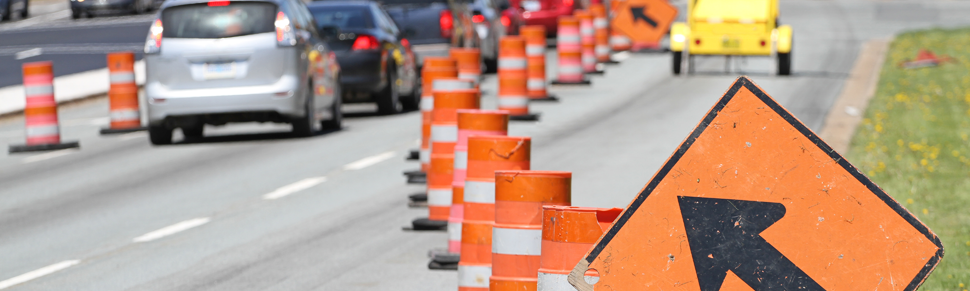
More than 2,100 people were struck and killed while stranded or working on the roadside in 2019–2023. Included among them were drivers and passengers who exited disabled vehicles, as well as roadside assistance providers, law enforcement officers, firefighters, emergency medical services providers, and “Good Samaritans” attempting to help them. Slow Down, Move Over (SDMO) laws seek to protect these vulnerable road users. These laws generally require drivers in the lane adjacent to a roadside worker or disabled vehicle to move to a different lane if possible and/or reduce their speed. While details vary by state, every U.S. state has some form of SDMO law. This research seeks to measure drivers’ knowledge of and attitudes toward SDMO laws, as well as self-reported driving behavior in relevant situations, in a large, nationally representative survey of drivers.
Methodology
The AAA Foundation for Traffic Safety collaborated with Ipsos North America to administer a survey to members of Ipsos’s KnowledgePanel, a representative sample of U.S. households recruited using methods that allow statistics from survey respondents to be projected to the entire U.S. population. A total of 5,887 drivers completed the survey in September and October 2025.
In the survey, drivers were shown short, computer-generated videos of an Interstate highway with traffic in the right lane passing a disabled vehicle, a tow truck, or a police car stopped on the right shoulder.
They were then asked questions about their own behavior and the behavior of other drivers in such situations, their knowledge of any applicable laws, and their personal beliefs about what actions drivers should take. Additional questions investigated overall support for SDMO laws and information sources from which drivers learn about new traffic laws.
Key Findings
The survey provided many important insights about drivers’ knowledge and behavior, including the following:
- More than 90% of drivers reported that they personally moved over and/or slowed down the last time they encountered a disabled vehicle, tow truck, or police car stopped on the shoulder of the highway.
- Drivers were much more likely to report moving over than slowing down.
- Drivers were much less likely to say that other drivers typically slowed down or moved over in similar situations.
- Only 66% of drivers believed their state’s law required drivers to take any special actions when passing a stopped police car on the shoulder of the highway, and only 58% said the same for tow trucks. (Every state’s law has such requirements.)
- In states where laws protect all stopped vehicles, fewer than half of drivers believed that the law required any special action when passing a lone disabled vehicle without incident responders present.
- Among drivers aware of the existence of any applicable laws, more than 90% knew the law required moving over, but fewer than half knew about requirements to slow down.
- In states that always require drivers to slow down (i.e., even if they also move over), fewer than one in five drivers knew about that requirement.
- More than two-thirds believed violators were “not very likely” or “not likely at all” to be caught.
- Despite gaps in knowledge of the law, more than 90% of drivers said that drivers should move over and/or slow down when passing a disabled vehicle, tow truck, or police vehicle stopped on the side of the road.
- Among drivers who believed incorrectly that the law only required moving over (a common misconception), almost all said drivers should move over, but fewer than one in four said drivers should slow down.
- When SDMO laws were explained to survey respondents, 90% expressed support and only 2% opposed them.
- When potential communication channels were explored, drivers rated their likelihood of learning about new traffic laws from signs on roads higher than any other source. However, many drivers recalled hearing about them from other sources as well, and drivers who had not heard of SDMO laws appeared to favor different sources of information than those who had, highlighting the importance of utilizing multiple channels for public education and outreach.
Results provide several important insights into driver behavior and knowledge. While the majority of drivers are aware of SDMO laws generally, many do not know when the laws apply, nor the specific actions required. Survey results suggest that more effort should be invested in informing drivers of the specific types of vehicles to which the laws apply, and to reinforce the “slow down” component of the law. The fact that most drivers believe drivers should slow down or move over is encouraging, and could potentially support the use of positive social norms in public education and outreach efforts. The report also provides regional data, as well as state-level data for many of the larger states, to facilitate identification of local needs and to provide baseline data for monitoring future changes and trends.
Authors




Suggested Citation
Tefft, B.C., Bai, X., McDonough, J., & Steinbach, R. (2026). Slow Down, Move Over Laws: National Survey of Drivers’ Knowledge, Attitudes, and Behaviors, 2025 (Technical Report). Washington, D.C.: AAA Foundation for Traffic Safety.